An RTG (Rubber-Tyred Gantry) crane can support long-term business expansion because it allows heavy loads and containers to be handled across large outdoor yards without requiring a permanent rail-mounted runway. This mobility gives terminal operators, logistics yards, manufacturers, shipyards, and heavy industrial facilities more flexibility as storage layouts, handling volumes, and production requirements change.
The long-term value of an RTG investment is not simply determined by its lifting capacity. A more useful evaluation considers how the crane fits the site’s future operating model: how many containers or loads must be handled, how the yard may be expanded, whether additional lanes may be required, what power system will be practical, and whether the crane can remain productive as operating cycles increase.
For this reason, a rubber tired gantry crane can be viewed as an infrastructure investment as much as a lifting machine. Its value develops over years through increased handling capacity, better use of yard space, and the ability to adapt the handling system without rebuilding the entire site.
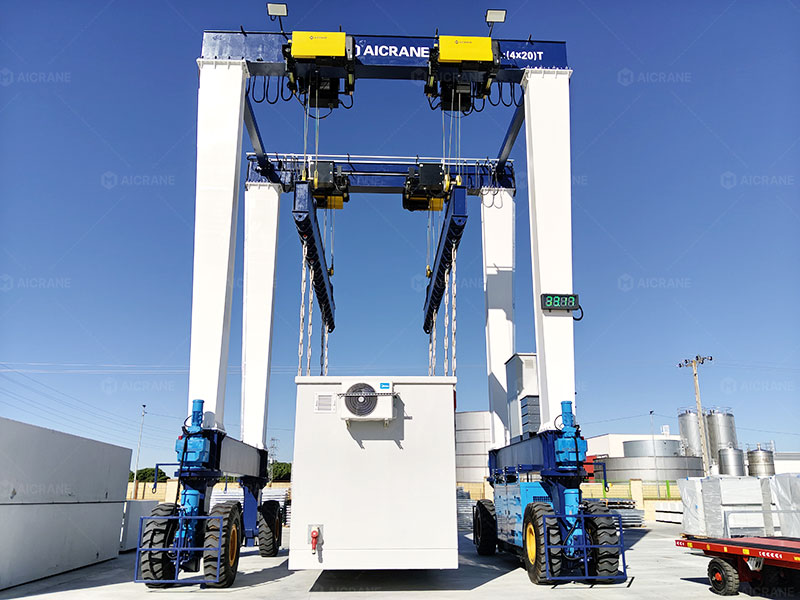
RTG Cranes Can Expand Handling Capacity Without Expanding the Entire Site
One of the most important constraints for a growing terminal or industrial yard is often not the total land area but how efficiently that land can be used.
An RTG crane travels on rubber tires and can serve defined storage blocks without requiring a fixed runway structure. This makes it possible to organize containers or heavy loads into multiple rows while maintaining access lanes for trucks and other vehicles.
For example, a container yard experiencing higher throughput may initially have sufficient land but insufficient handling capacity. Adding an RTG can increase the number of storage positions that can be actively served without immediately acquiring additional land.
The same principle applies to industrial applications.
A manufacturer may need to store steel products, precast components, fabricated structures, or other heavy loads between production stages. If ground-level handling equipment becomes the bottleneck, an RTG can provide vertical lifting and horizontal movement across a defined work area.
The expansion benefit therefore comes from increasing the productive capacity of existing space.
Yard Layout Flexibility Becomes More Valuable as Operations Change
Business expansion rarely follows a perfectly predictable layout.
A logistics operator may add new customers. A container terminal may change its storage strategy. A fabrication plant may introduce larger products. A shipyard may increase the size of sections handled in a production area.
A fixed lifting system can become difficult to modify when the operating area changes because its rails, runways, foundations, or supporting structures are tied to a specific layout.
An RTG provides a different approach.
Because the mobile gantry crane moves on rubber tires, the operating block can be reorganized without reconstructing a complete crane runway. The crane still requires appropriate ground conditions, travel lanes, load-bearing capacity, and operating clearances, but the infrastructure commitment can be less restrictive than with permanently rail-mounted equipment.
This is particularly useful for companies expanding in stages.
Instead of designing the entire future site before purchasing equipment, an operator can develop handling capacity around current requirements while retaining options for future yard configuration changes.
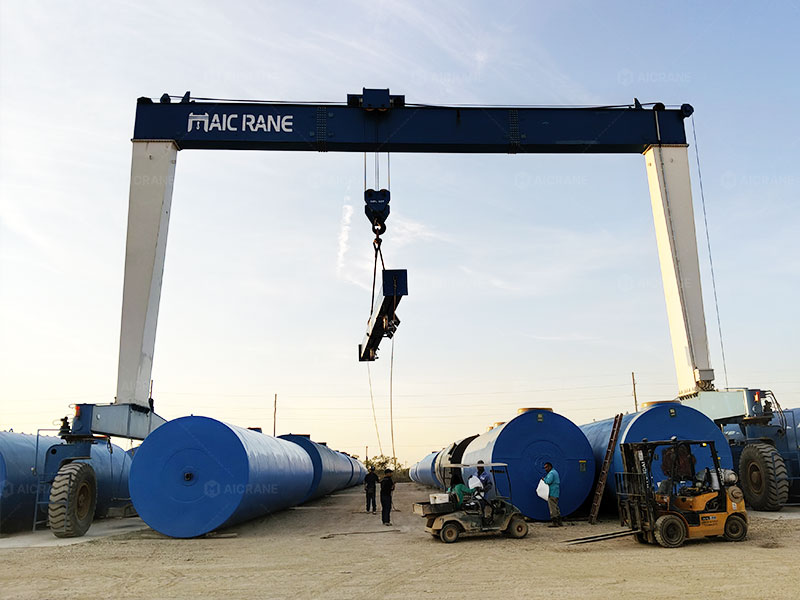
RTG Capacity Can Be Matched to Different Stages of Growth
A long-term equipment investment should not be based only on today’s workload.
Suppose a facility currently handles 15,000 container moves per year but expects its volume to increase substantially over the next several years. Selecting equipment only for the current workload may create a capacity bottleneck later. Conversely, purchasing substantially more capacity than the site can use may tie up capital without generating corresponding productivity.
RTG crane configuration can be matched to the expected operating requirement.
Important parameters include:
- Rated lifting capacity
- Number of containers or loads handled
- Stacking height
- Span
- Working aisle and lane arrangement
- Hoisting and traveling speeds
- Duty class
- Working cycles
- Power configuration
- Operator or automation requirements
For container handling, an RTG may be configured for different stacking arrangements and lifting capacities. For industrial yards, the required configuration can instead be determined by the dimensions and weights of steel structures, precast components, machinery, or other loads.
This allows the equipment investment to follow the company’s expansion model rather than being treated as a one-size-fits-all purchase.
Higher Productivity Can Delay the Need for Additional Handling Equipment
Expansion does not always mean buying more machines.
A business can increase output by improving the utilization of existing equipment. If an RTG can complete each handling cycle efficiently and maintain consistent availability, the same crane fleet may support higher throughput before additional units are required.
Working cycles are particularly important.
Consider an RTG that handles containers during a high-volume operating period. Its actual productivity depends on more than rated capacity. Hoisting height, trolley movement, gantry travel, positioning accuracy, truck interaction, operator workflow, and waiting time all affect the number of completed moves.
For an industrial application, the same principle applies to repeated heavy-load transfers.
A 50 ton gantry crane that is technically capable of lifting 50 tons but spends significant time waiting for trucks, repositioning, or completing inefficient travel patterns may provide less practical capacity than its rated load suggests.
Long-term planning should therefore evaluate handling cycles per hour, annual operating hours, expected utilization, and availability, rather than relying only on tonnage.
Rubber-Tyred Mobility Supports Phased Site Expansion
One of the strongest long-term characteristics of an RTG is its ability to operate within a defined yard block without a permanent rail runway.
This can support phased expansion.
For example, a logistics company may first develop one storage block and later add another. If the site layout and operating plan are designed appropriately, additional RTGs can be introduced as the workload increases.
The expansion strategy can involve:
- Establishing the initial handling block.
- Monitoring utilization and peak demand.
- Adding storage capacity or operating lanes.
- Increasing the number of RTGs when handling demand justifies it.
- Reconfiguring operating areas as customer or production requirements change.
This approach can make capital expenditure more closely aligned with actual business growth.
However, mobility should not be interpreted as unlimited freedom. RTG operation still depends on ground bearing capacity, flatness, drainage, travel clearance, turning arrangements, power supply, and safety separation. These requirements should be incorporated into the site development plan before equipment delivery.
Power Configuration Can Affect Long-Term Operating Costs
The power system is another factor that can influence the long-term value of an RTG investment.
Depending on the application and site conditions, RTGs may use configurations such as diesel generator sets, cable reels, or battery-based power systems.
The appropriate choice depends on operating hours, yard layout, availability of electrical infrastructure, required mobility, environmental targets, and energy costs.
For a site without a stable electrical supply, a diesel generator-based configuration may provide operational independence. Where suitable electrical infrastructure exists, alternative power arrangements can reduce dependence on onboard fuel generation.
Battery-powered configurations may also become relevant where a facility prioritizes reduced local emissions and lower engine operation.
The important point is that power selection should be considered as part of the crane’s lifecycle economics rather than as an isolated technical specification.
A lower purchase price does not automatically produce a lower long-term cost if energy consumption, maintenance, downtime, or infrastructure requirements are substantially higher.
A Proper Duty Class Helps Protect the Investment
RTG cranes used for intensive commercial operations may experience thousands of lifting, trolleying, and traveling cycles over their service life.
This makes duty classification important.
A crane designed for occasional heavy lifting may not be appropriate for a facility that operates continuously with frequent load cycles. The structural design, hoisting mechanism, electrical system, brakes, wheels, motors, and other components need to correspond to the expected working conditions.
For long-term expansion planning, buyers should therefore provide the manufacturer with realistic operating information, including:
- Average and maximum load
- Daily operating hours
- Expected annual working days
- Number of lifting cycles
- Maximum lifting height
- Travel distance
- Outdoor environmental conditions
- Required availability
- Future workload expectations
A correct duty configuration can reduce the risk of purchasing equipment that becomes under-specified as the business grows.
RTG Cranes Can Support Expansion Without Locking the Business Into One Layout
A business may change significantly over a 10-year equipment lifecycle.
A container terminal can add new services. A steel manufacturer can increase fabrication capacity. A shipyard can modify its production sequence. A logistics company can change its cargo mix.
An RTG can accommodate some of these changes because its operating area is not defined by a permanently installed overhead runway.
This does not mean that every RTG can automatically serve every future application. Span, lifting height, wheel arrangement, load distribution, electrical configuration, and structural design still determine the crane’s operating envelope.
Instead, the advantage is that the basic handling concept can remain useful while the surrounding operation evolves.
That distinction matters when calculating the economic life of the equipment.
Maintenance Planning Determines How Long the Investment Remains Productive
The economic value of an RTG depends heavily on availability.
A crane that remains mechanically sound and operational for a long period can continue contributing to throughput after the initial investment has been recovered. Preventive maintenance therefore becomes part of the expansion strategy.
Maintenance planning should cover critical systems such as:
- Hoisting mechanisms
- Wire ropes and sheaves
- Brakes
- Motors and drives
- Wheels and tires
- Hydraulic components where applicable
- Electrical cabinets
- Control systems
- Safety devices
- Structural connections
Condition monitoring and scheduled inspections can also help identify problems before they become major failures.
For high-utilization yards, spare-parts availability and technical support should be considered during procurement. A lower equipment price may have limited value if obtaining critical components causes extended downtime.
RTG Investment Should Be Evaluated Through Total Cost of Ownership
Purchase price is only one part of an Aicrane RTG crane investment.
A long-term evaluation should consider:
Total cost of ownership = purchase cost + infrastructure + energy + maintenance + labor + downtime + major replacement costs
The exact calculation varies by project.
For example, two RTGs with similar rated capacity may have different lifecycle costs because of differences in fuel consumption, operating hours, maintenance requirements, power systems, spare-parts costs, or expected availability.
A useful investment analysis should therefore estimate:
- Expected annual operating hours
- Expected handling cycles
- Energy or fuel consumption
- Scheduled maintenance cost
- Major component replacement intervals
- Labor requirements
- Expected downtime
- Residual service value
- Future capacity requirements
This provides a more realistic basis for deciding whether an RTG can support the company’s expansion plans.
Future-Proofing Starts Before the Crane Is Ordered
The strongest long-term RTG investment is usually planned together with the site’s future operating requirements.
Before ordering equipment, buyers should determine the expected development of:
Load: What maximum weight will need to be handled?
Volume: How many moves or lifting cycles are expected today and several years from now?
Space: How many storage blocks, lanes, or production areas may be added?
Height: Will future stacking or lifting requirements increase?
Power: Will the site have stable electrical infrastructure, or will mobile generation remain necessary?
Duty: Will operating hours and cycle frequency increase as the business grows?
Technology: Will automation, remote operation, or advanced control systems become part of the future operating model?
Answering these questions early allows the RTG configuration to be selected around the business trajectory rather than around a single year’s workload.
Conclusion
RTG crane investment can support long-term business expansion by combining high lifting capacity with flexible yard operation. Its value comes from several connected factors: better utilization of existing land, scalable handling capacity, adaptable yard layouts, configurable power systems, and the ability to maintain productivity as operating volumes increase.
The most important consideration is not simply whether an RTG can lift the required load today. The better question is whether its capacity, span, lifting height, duty class, power system, travel arrangement, maintenance strategy, and operating cycle will remain appropriate as the business develops.
For a growing container terminal, logistics yard, manufacturing facility, shipyard, or heavy industrial site, this makes RTG selection a long-term infrastructure decision. When the crane is matched to both present requirements and realistic future expansion, the investment can continue generating handling capacity without requiring the entire yard infrastructure to be redesigned each time the business grows.