Let’s be honest. You cannot build a city with wheelbarrows and buckets. Saudi Arabia is not constructing villas anymore. It is erecting vertical metropolises: NEOM, the Red Sea Project, Diriyah Gate. These are megaprojects demanding megastructures. And at the heart of every towering slab, every sprawling foundation, sits a concrete pump. Not just any pump—specific concrete pump types for specific jobs. The argument here is simple: the diversity of pump technology directly enables the diversity of Saudi real estate. Without truck-mounted booms, static line pumps, and trailer units, the Kingdom’s construction pipeline would clog faster than a dry hose. Let me show you why each type is indispensable, and why ignoring this reality means watching your project sink into the sand.
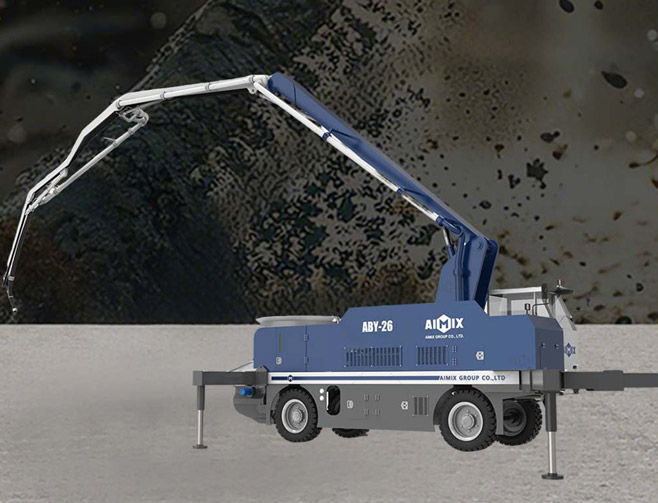
1. Truck-Mounted Boom Pumps: The Kings of the High-Rise
Look at the Riyadh skyline. Cranes everywhere. But look closer. Snaking up the side of every tower is a red or orange pipeline. That line is fed by a truck-mounted boom pump. These machines are the thoroughbreds of concrete placement. They arrive on site, extend their hydraulic arms (up to 70 meters), and place concrete exactly where the formwork waits. No wheelbarrows. No cranes with buckets. Just a continuous, precise stream of mix. For residential towers exceeding 20 stories, the concrete boom pump for sale is non-negotiable. Why? Speed and reach. A 50-meter boom can cover an entire floor plate from one position. The truck’s own engine powers the pump, independent of site cranes. One operator, one remote control, and 120 cubic meters per hour. That’s how you pour a floor slab in a single shift.
1.1 Articulated Reach vs. Placements
Not all booms are equal. Some have 4 sections. Some have 5. The articulation matters in tight urban sites. In Jeddah’s crowded districts, a 5-section Z-fold boom can snake around existing buildings and power lines. A simple 4-section roll-fold boom needs a clear corridor. Saudi contractors have learned this the hard way. They now specify “articulation geometry” in their tenders—a detail invisible to architects but critical to feasibility. The passionate pump operator knows that a 20-meter horizontal reach at full vertical extension is different from 20 meters at ground level. The boom’s envelope changes with every angle. Good operators study these charts. Bad ones hit obstacles. And hitting an obstacle at 50 meters height? That’s a catastrophic failure, raining concrete and steel onto workers below. So the reliance is not just on the pump type, but on the configuration of that type.
1.2 The Outrigger Dance
A boom pump is a teetering giant. It weighs 40 tons. With the boom extended sideways, the tipping moment is immense. That’s why outriggers—those hydraulic legs—spread wide, sometimes 8 meters across. In Saudi Arabia’s sandy soils, outrigger pads must be huge (1 square meter minimum) to prevent sinking. Contractors who skip pads find their pump leaning like the Tower of Pisa after a few hours. The solution is standard now: each pump comes with steel pads and a requirement for compacted gravel beneath. But I’ve seen sites where the gravel was just a thin veneer over sand. The pump sank 20 centimeters, the boom went out of level, and the placement had to stop. A two-hour delay on a critical path. That’s real money. So the reliance on the pump type is intertwined with reliance on proper setup. The machine is only as good as the ground it stands on.
2. Static Line Pumps: The Unsung Heroes of Infrastructure
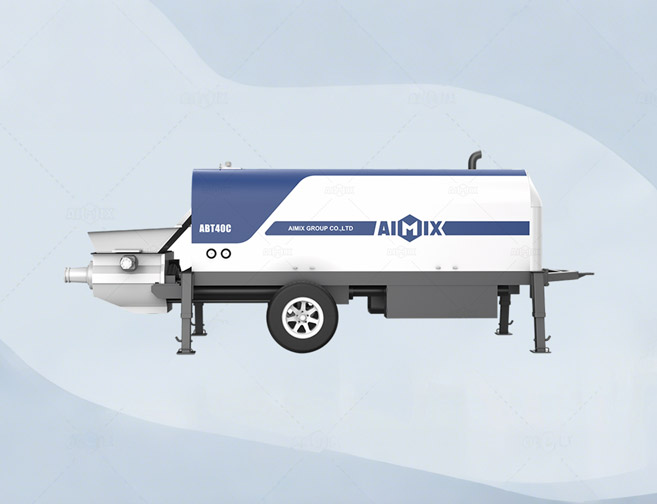
While boom pumps grab the glory, static line pumps do the gritty work. These are trailer-mounted units without booms. They connect to steel pipelines that run along the ground, up scaffolding, or through core holes. For Saudi Arabia’s expansive real estate projects—think villa compounds with hundreds of separate slabs—static pumps are the workhorses. One pump sits at a central batching plant. Pipelines radiate out to different zones. The pump pushes concrete 500 meters horizontally or 150 meters vertically. No truck mixer needs to drive through muddy villa plots. No boom pump needs to reposition every hour. Just a steady, relentless flow through a 125mm pipe.
2.1 The Hydraulic Pressure Debate
Static pumps generate insane pressure—up to 200 bar. That’s enough to push concrete through a 200-meter horizontal line with three 90-degree bends. But pressure is a double-edged sword. Too much, and you blow a pipeline joint. Too little, and the concrete stalls. Saudi operators have learned to specify pumps with “pressure on demand” systems. These concrete pumps for sale in Saudi Arabia sense the resistance in the line and adjust output accordingly. They don’t just hammer away at maximum pressure. That nuance is critical when pumping lightweight aggregate concrete (common in modern Saudi construction for thermal insulation). Lightweight mix is more compressible. It responds poorly to hammering. A gentle, steady pressure works better. So the pump type matters, but the control logic within that type matters just as much. Contractors who ignore this distinction end up with blocked lines and hours of disassembly.
Another hidden factor: pipeline cleaning. After a pour, the line must be cleared. Most static pumps offer a “reverse” function to suck the concrete back into the hopper. But not all reverse valves are equal. Ball valves are cheap and reliable but create turbulence. Gate valves are smoother but prone to jamming with coarse aggregate. Saudi contractors in hot climates prefer ball valves because the high ambient temperature keeps the rubber seals pliable. In cooler mountain regions (like Taif), gate valves work fine. This seems like a minor detail. It’s not. A valve failure mid-pour means a blocked line and a ruined slab. Know your valve type.
2. Trailer Pumps: The Agile Option for Tight Spaces
Sometimes, neither a boom pump nor a static line pump fits the bill. Enter the trailer pump. These are compact units, often with their own small engine, that can be towed behind a pickup truck. They lack booms and long pipelines. Instead, they attach to a single section of flexible hose, typically 20-50 meters long. For Saudi Arabia’s growing number of infill projects—small apartment buildings wedged between existing structures—the line pump is a savior. It fits through a 2-meter gate. It sets up in ten minutes. And it places concrete exactly where a truck mixer cannot reach.
2.1 The Agility Advantage in Urban Infill
Infill is where Saudi real estate is heading. The days of sprawling greenfield developments are ending. Now, developers buy old villas, demolish them, and build 6-story walk-ups on the same land. The access is terrible. Streets are narrow. Neighbors complain about noise. A truck-mounted boom pump cannot maneuver in these confines. A static line pump requires a long pipeline through the neighbor’s driveway (not permitted). But a trailer pump? Park it on the street, run the flexible hose through a ground-floor window, and place concrete on the third floor via an exterior staircase. It’s not elegant. It works. Contractors who own trailer pumps get these infill contracts. Those who don’t, lose them. The type of pump directly determines market access.
One more passionate point: maintenance. Trailer pumps are simpler. Fewer hydraulic hoses, no complex boom articulation, no outriggers. A skilled mechanic can rebuild a trailer pump’s S-valve in a day. The same job on a boom pump takes three days and requires lifting equipment. For a contractor with a fleet of 20 pumps, the maintenance cost difference is staggering. That’s why many Saudi rental companies are shifting toward trailer pumps for small to medium jobs. They’re cheaper to buy, cheaper to run, and easier to fix. And in a boom market, availability of spare parts and service technicians becomes the real bottleneck. The pump that is easiest to keep running is the pump that earns the most money.
The Reliance Is Real: Types Enable Scale
Saudi Arabia’s real estate boom is not a miracle. It is engineered. And concrete pumps are the hidden enablers. Without truck-mounted booms, high-rises would take twice as long to pour. Without static line pumps, villa compounds would drown in mixer truck traffic. Without trailer pumps, infill projects would remain vacant lots. Each type addresses a specific constraint: reach, pressure, or agility. Contractors who understand this taxonomy win bids. Those who buy “a concrete pump” generically end up with the wrong tool. They struggle. They fail. They blame the market. Don’t be that contractor. Study the types. Match the pump to the project. And watch your real estate portfolio rise, floor by floor, pumped into existence.