Managing a road construction project in Latin America requires a delicate balance between unpredictable logistics, fluctuating material costs, and strict governmental deadlines. For years, contractors across the region relied heavily on third-party commercial asphalt suppliers to fulfill their project needs. While this approach minimized initial capital expenditures, it often exposed builders to volatile market rates and costly delivery delays. Today, a major shift is occurring as regional firms realize that true financial control comes from owning the production process.
To insulate themselves from external market shocks, forward-thinking infrastructure companies are investing in their own manufacturing machinery. When calculating the upfront price of asphalt plant(precio de planta de asfalto) equipment, savvy procurement managers view the purchase not merely as an asset acquisition, but as a comprehensive strategy for long-term budget optimization. By producing hot mix asphalt directly on-demand, contractors can precisely calculate their per-ton operational costs, effectively eliminating the unexpected surcharges that frequently derail public work projects.
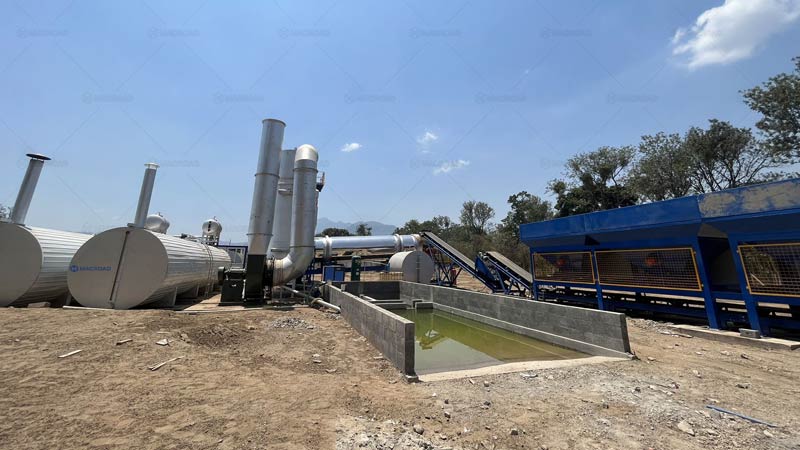
The Financial Strategy Behind Owning an Asphalt Plant
The primary driver for purchasing an asphalt production unit is the immediate stabilization of material expenses. Raw aggregate and liquid bitumen costs fluctuate based on regional availability and global oil markets. However, when a contractor controls the mixing process, they can negotiate bulk raw material contracts, significantly lowering their baseline production costs compared to buying pre-mixed asphalt from a competitor.
Furthermore, internal ownership dramatically curtails logistical waste. When hauling hot mix asphalt over long distances, temperature loss is an ever-present risk. If a mix cools below its optimal compaction temperature before reaching the paver, it is deemed defective and must be discarded. Producing asphalt close to or directly on the job site ensures that every single ton paid for is successfully laid and compacted, bringing material waste metrics down to near zero.
Choosing the Right Scale: The Rise of the Mini Asphalt Plant
Not every road project demands a massive, multi-hundred-ton-per-hour installation. In fact, much of Latin America’s current infrastructure focus centers on upgrading secondary rural roads, municipal street rehabilitation, and localized maintenance contracts. For these specific scopes of work, a large stationary factory is financially impractical. Instead, regional contractors are heavily adopting the mini asphalt plant(mini planta de asfalto).
These smaller, highly agile units offer several distinct budgetary advantages for mid-sized construction firms:
- Low Initial Capital Outlay: Smaller mixing units lower the barrier to entry, allowing local contractors to transition from buyers to producers without overextending their credit lines.
- Reduced Site Preparation Costs: Compact units require minimal concrete foundation work and can be set up on stable, cleared ground quickly, saving thousands in site prep labor.
- Optimized Fuel Consumption: Operating a small burner tailored exactly to a daily patch-paving requirement avoids the massive energy expenditure of firing up a full-scale plant for a minor batch.
By tailoring equipment size directly to project scale, construction firms avoid over-capitalization while retaining full independence over their material supply chains.
Maximizing Fleet Mobility and Flexibility
For contractors managing multiple scattered contracts, static placement is a financial liability. Evaluating the mobile asphalt plant price becomes a critical step during the fleet planning phase. While highly mobile units may carry a slight engineering premium upfront, the ability to pack up the plant, tow it to a new municipality, and begin production within a few days provides unparalleled cost advantages over the course of a fiscal year.
A highly competitive mobile asphalt plant price ensures that a contractor can bid on distant rural tenders that competitors cannot easily service due to logistics constraints. Moving the production source alongside the moving paving front insulates the project budget from escalating haul-truck diesel costs.
Case Study Context: Operational Management of an Asphalt Plant in Colombia
To understand how this works in practice, one can look at the evolving infrastructure landscape of the Andean region. Operating an asphalt plant in Colombia(Operar una planta de asfalto en Colombia) introduces unique geographical hurdles, such as navigating mountainous terrains like the Cordillera Central. Hauling pre-mixed asphalt across steep, winding mountain passes is inherently risky; traffic delays can ruin whole truckloads of hot mix.
| Operational Challenge | Impact on Project Budget | Asphalt Plant Solution |
|---|---|---|
| Mountainous Logistics | High truck rental fees, excessive fuel consumption, mix cooling risks. | Deploying a compact or mobile plant at the valley base near the work zone. |
| Unpredictable Weather | Rain delays cause sudden halts; commercial suppliers still charge for ordered batches. | Immediate production shutdown capability at the owner’s discretion, saving raw materials. |
| Strict Quality Compliance | Penalties from national infrastructure agencies (like ANI) for sub-standard pavements. | Precise control over aggregate moisture and bitumen ratios via integrated control cabins. |
Contractors operating an asphalt plant in Colombia can easily pause operations the moment a sudden tropical downpour occurs, preventing the waste of expensive bitumen. This level of agility provides a vital financial safety net that commercial purchase agreements simply cannot offer.
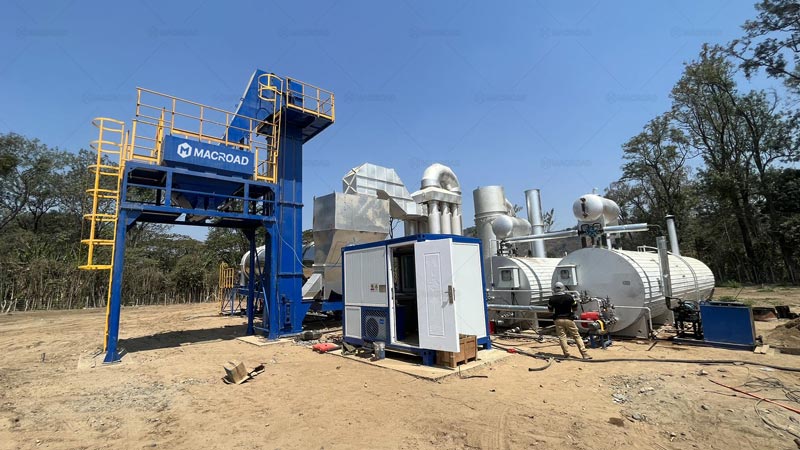
Strategic Technology Investments and Mobile Asphalt Plant Price Considerations
Ultimately, controlling a construction budget requires modernizing tracking systems alongside physical machinery. Today’s mixing equipment comes outfitted with sophisticated automated control software. These computer systems accurately weigh out aggregates, measure exact percentages of recycled asphalt pavement (RAP), and inject precise amounts of bitumen down to the kilogram.
When assessing these technological upgrades, accounting departments must look beyond the base mobile asphalt plant price(precio base de la planta móvil de asfalto) and evaluate the total cost of ownership. Integrated automation systems might slightly elevate the initial investment tier, but the real-time financial defense they provide is unmatched. By leveraging automated data logging, project managers can track exact material consumption in real time against their initial estimates. Any discrepancy in binder usage or fuel burn is highlighted instantly, allowing the plant operator to recalibrate equipment before costly material overruns compound over weeks of production. Through this combination of accurate machinery sizing, localized material production, and tight computerized control, Latin American builders are successfully protecting their profit margins and delivering high-quality infrastructure at predictable, sustainable costs.