Operating a concrete batching plant in the Latin American market presents a unique set of challenges that differ significantly from European or North American standards. The geographical diversity—ranging from the humid lowlands of the Amazon to the high-altitude peaks of the Andes—directly impacts the quality of raw materials available. For construction companies and material suppliers, the primary hurdle is the inconsistency of local aggregates. Often, producers must work with irregular crushed stone or sand characterized by a high mud and silt content. Failure to adapt to these variables can lead to compromised structural integrity, increased chemical costs, and equipment failure. This article explores how modern facilities can adjust their technical and operational strategies to maintain high-quality output despite challenging raw materials.
Understanding the Aggregate Challenge in the Region
In many territories, particularly when managing a concrete plant Peru developers rely on, the geological makeup of local quarries produces “dirty” aggregates. High clay and silt content in sand can interfere with the chemical bond between the cement paste and the stone, leading to a significant drop in compressive strength. Furthermore, irregular particle shapes in crushed stone can affect the workability and pumpability of the mix.
When raw materials are inconsistent, the concrete plant(plantas de hormigón) must move away from static recipes toward dynamic adjustment. This requires a combination of robust hardware, such as advanced washing systems, and intelligent software capable of real-time moisture and volume compensation.
Technical Adjustments for High Mud Content
Advanced Washing and Pre-Treatment Systems
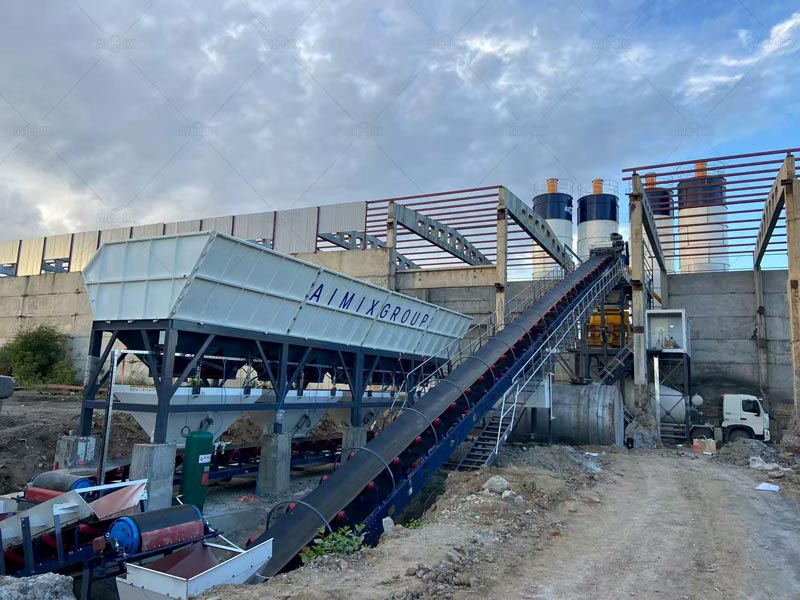
The first line of defense against high mud content is a high-efficiency washing system. Many operators are now integrating screw washers or log washers into their aggregate storage phase. By removing fine clay particles before the material reaches the weighing hoppers, the plant ensures that the cement-to-water ratio remains stable.
For a mini concrete plant where space might be limited, compact modular washing units are becoming a standard addition. These units allow smaller operations to process locally sourced, lower-grade sand into high-quality fine aggregate without the need for a massive industrial footprint.
Chemical Admixture Optimization
When mud content cannot be entirely removed, the chemical strategy of the concrete plant must change. Polycarboxylate-based superplasticizers are often used to maintain fluidity. However, clay particles tend to “absorb” these chemicals, rendering them ineffective. Adjusting the mix design to include clay-mitigating agents or sacrificial surfactants can help prevent the clay from interfering with the hydration process.
Coping with Irregular Crushed Stone
Vibratory Screening and Sorting
Irregularly shaped crushed stone—often flaky or elongated—creates more voids in the concrete mix, requiring more cement paste to fill those gaps. To counter this, plants are upgrading their screening decks. By utilizing multi-stage vibratory screens, the plant can better categorize stones by size, allowing for a “gap-graded” approach that optimizes the density of the final product.
Automated Moisture Compensation
In humid climates, such as those affecting a concrete plant in Santiago, Chile(plantas de hormigón en Santiago) during the winter months, or in the tropical regions of Peru, aggregate moisture varies by the hour. Irregular stone surfaces trap water differently than smooth river rock. Modern plants now install microwave moisture sensors in the aggregate bins and the mixer itself. These sensors provide the control system with the data needed to subtract or add water in real-time, ensuring that every batch meets the slump requirement regardless of how wet the sand or stone arrived.
Operational Strategies for Regional Success
Localized Mix Design Development
A mistake often made is applying a universal mix design to local materials. A concrete plant Peru(Una planta de concreto Perú) operators manage must develop localized “recipes” that account for the specific mineralogy of Andean rock. This involves frequent laboratory testing to determine the “sand equivalent” value and the methylene blue value, which indicates the presence of harmful expansive clays.
Scalability and the Rise of the Mini Concrete Plant
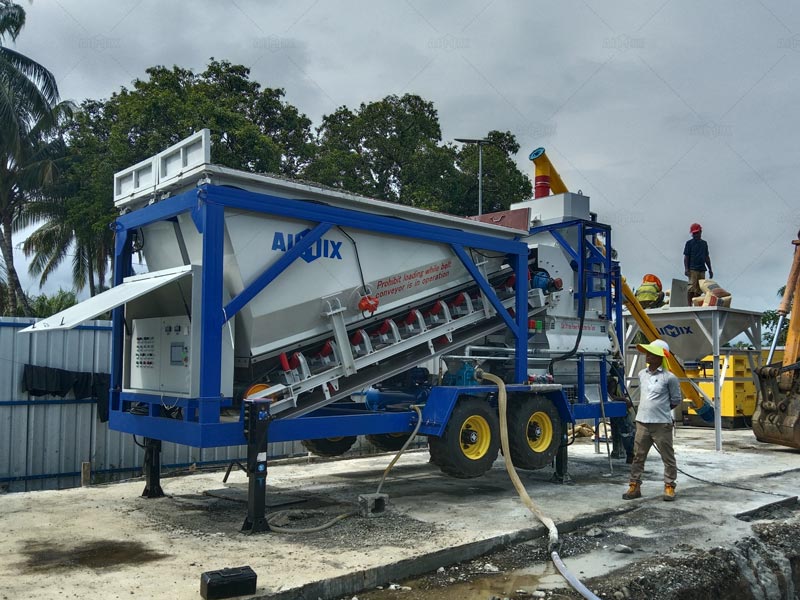
The trend toward decentralization in Latin American construction has increased the demand for the mini concrete plant. These smaller, often mobile units are easier to clean and maintain when dealing with “sticky” or high-mud materials. Because they serve specific, local projects, the mix can be fine-tuned to the exact quarry source being used for that job, reducing the variables that larger, centralized plants must juggle.
Equipment Maintenance in Harsh Conditions
Irregular aggregates and silt are highly abrasive. The fine particles in mud can act like sandpaper on the internal liners of a twin-shaft mixer. For a concrete plant in Santiago, Chile, where production volumes are high, using high-chromium cast iron liners and reinforced mixing blades is essential to prevent frequent downtime. Additionally, dust extraction systems must be more robust to handle the finer particulates associated with dry, silty sand.
Turning Challenges into Competitive Advantages
While irregular crushed stone and high mud content are significant obstacles, they are not insurmountable. By investing in sophisticated sensory technology, robust washing systems, and flexible chemical strategies, a concrete plant can produce world-class concrete using sub-optimal local materials.
Whether you are operating a large-scale concrete plant Peru infrastructure projects depend on, or a versatile mini concrete plant(mini planta de concreto versátil) in a developing suburb, the key lies in adaptation. Understanding the mineralogy of your region and adjusting your hardware to match it ensures project success and long-term mechanical reliability. In the competitive landscape of concrete plant in Santiago, Chile and beyond, those who master the art of aggregate management will lead the market in both quality and cost-efficiency.